Holster Retention Levels Explained: Level 1 to Level 4
The short answer: holster retention levels count the number of things holding the gun in. Level 1 is the holster’s own fit: friction, or Kydex that clicks into place. Each level above that adds one active retention device you have to release, like a thumb break or a locking hood. Level 3 is the common duty choice, and Level 4 is the highest you’ll typically see today. Your employer decides what you carry. Whichever level that is, you need to be proficient with it, and that only comes from practice.
Not to be confused with your license: in Texas, “Level III” also means the DPS commissioned (armed) security officer license. Holster retention levels are a separate rating system that has nothing to do with your license level.
What holster retention levels mean
Retention is what keeps your handgun in the holster when you run, fall, wrestle, or someone grabs for it. Most manufacturers, instructors and employers count retention levels by the number of devices securing the firearm:
| Level | What holds the gun | Advantages | Obstacles |
|---|---|---|---|
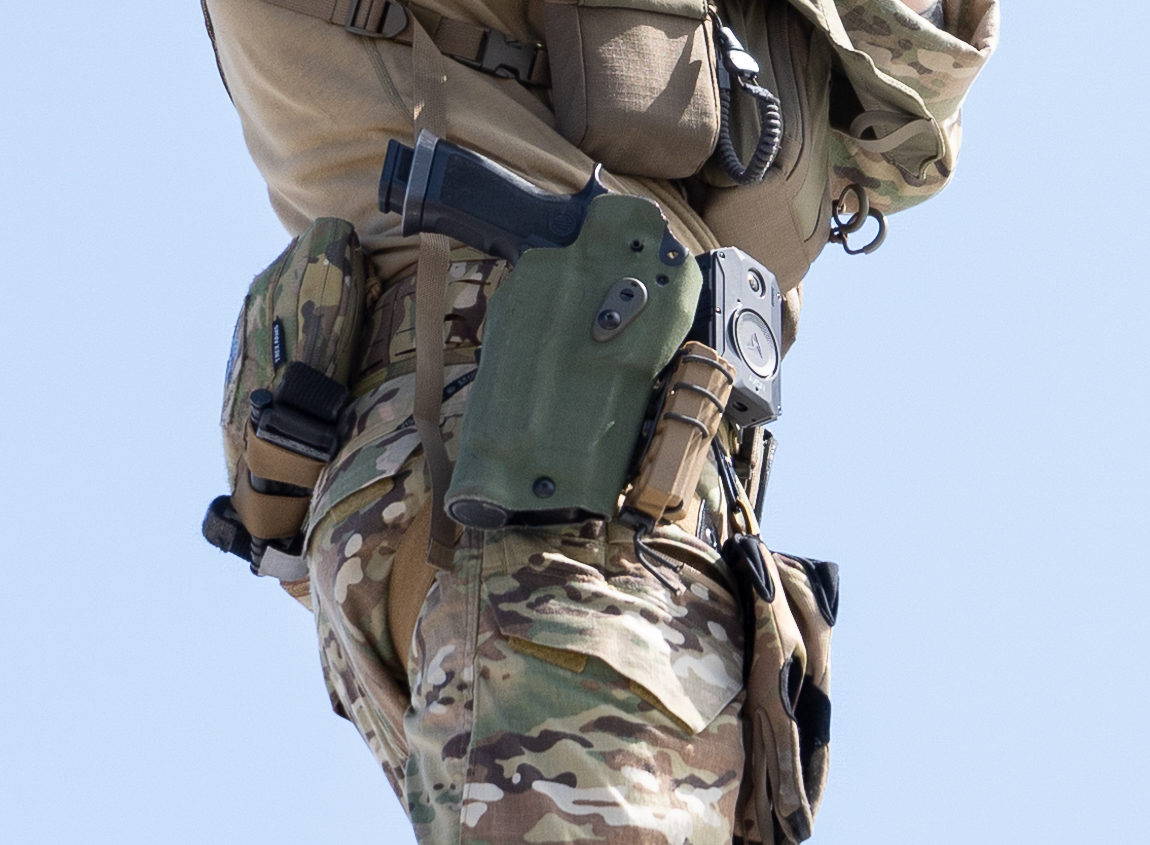
| Level 1 | Passive only: friction, or Kydex that clicks the gun into place. | Fastest, simplest draw. | The least protection against a gun grab. Rarely accepted for duty. |
| Level 2 | Friction plus one active device, such as a thumb break, a thumb bail, or a trigger-finger release. | Still quick, with a real step up in security. | Only one active barrier between an attacker and your gun. Below many employers’ duty requirements. |
| Level 3 | Friction plus two active devices, commonly a thumb release plus a locking hood. | The common duty standard. Meaningful protection against a gun takeaway. | More to learn. Slower and clumsier until you’ve trained with it, reholstering included. |
| Level 4 | Friction plus three active devices. | Maximum security for close-contact environments such as corrections. | The most steps to learn and the most practice needed. |
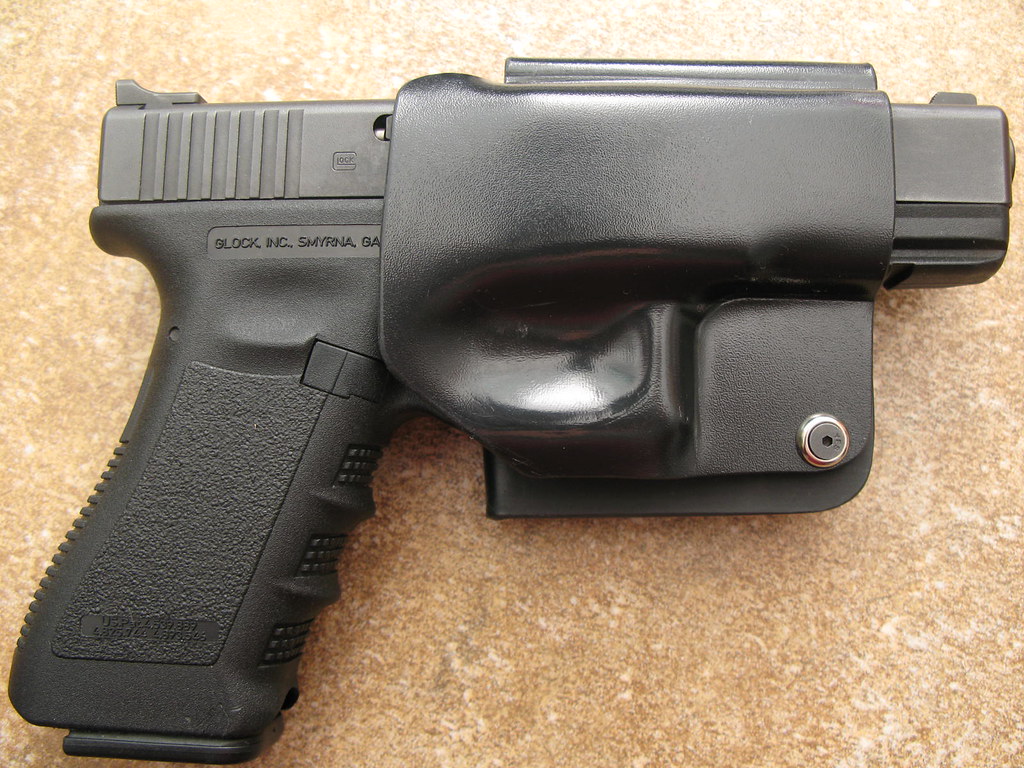
Safariland developed the original retention rating system. Today there’s no true established standard: manufacturers rate their own holsters, and the rating is usually based on the number of retention devices, not hand motions.
That’s the more honest measure, because with good training several devices can be released in what is effectively one motion. Our lead instructor can drop the hood bail and trigger the thumb release on a Safariland duty holster in a single movement. He can do the same on the Alien Gear Rapid Force by hitting the rearmost part of the button so the button and paddle release together. The devices are still there and still stop a gun grab; training is what makes them fast for you. Don’t trust the number alone: learn exactly how your holster works.
Some holsters can be set up at more than one level. The Alien Gear Rapid Force duty holster, for example, can be configured as Level 3, with a thumb-swipe lock plus a locking hood that has a push-button release, or as Level 2 by removing the hood. It also comes with different sizes of push buttons and thumb swipes so the controls fit your hand.
Why many companies ban SERPA-style holsters
Some Level 2 holsters, best known from the Blackhawk SERPA, release the gun with a button pressed by your trigger finger. In our experience, many security companies ban the SERPA and any holster with a trigger-finger release, for two reasons:
- Negligent discharge risk. Your trigger finger presses inward to release the gun, and an untrained draw can carry that pressure straight into the trigger guard as the gun clears the holster.
- Debris. Dirt, sand or grit can work in behind the release button and keep it from depressing, so the gun won’t come out when you need it.
Our view: a trained officer can run one safely. But it’s absolutely true that most people simply don’t train with their gear, and for an untrained shooter the discharge risk is extremely high. If your employer bans them, that’s why, so don’t buy one for duty.
“Level 3 is too slow” is a training problem
Every class has someone who is die-hard Level 2 and insists Level 3 will get them killed because it’s slower. In our experience, they’re not wrong that it will slow them down. They’re wrong about why.
The extra tenths of a second and the hang-ups come from one thing: they won’t practice with the gear. A few days of dry-fire practice is usually enough to make a Level 3 draw smooth and automatic. A holster you’ve trained with is fast. A holster you haven’t trained with is slow, whatever its level. The fix is practice, not a lower level of retention.
How to practice with any holster
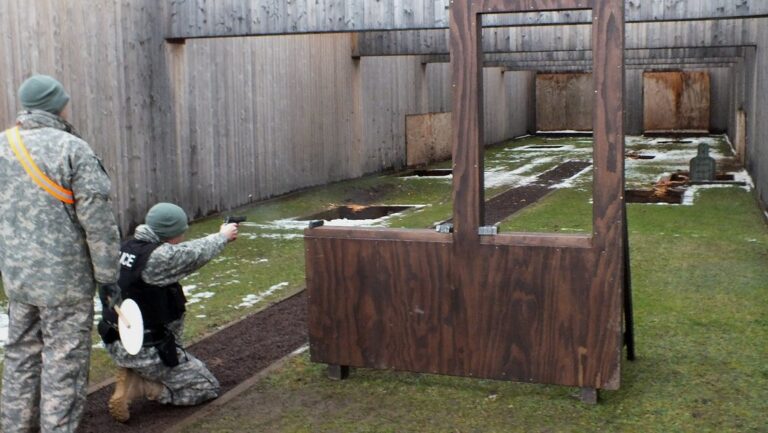
Practice every holster, Level 1 through Level 4, the same way: dry fire, with a clear and safe firearm and no ammunition, until your draw and reholster are smooth and safe. Then add speed. These steps follow NRA and NSSF safety guidance:
- Unload and verify. Remove the magazine, lock the slide open, and visually and physically check that the chamber is empty. Check it more than once. Never assume a gun is unloaded.
- Put all ammunition in another room. No loaded magazines, no loose rounds within reach.
- Pick a safe direction. Point only at a backstop that would stop a bullet if everything went wrong. Most interior walls, doors and furniture won’t.
- Go slow. Release each lock in order, draw and present, then reholster deliberately.
- Repeat until it’s smooth and safe, then let speed build on its own.
- Finish on the range with live fire under qualified instruction.
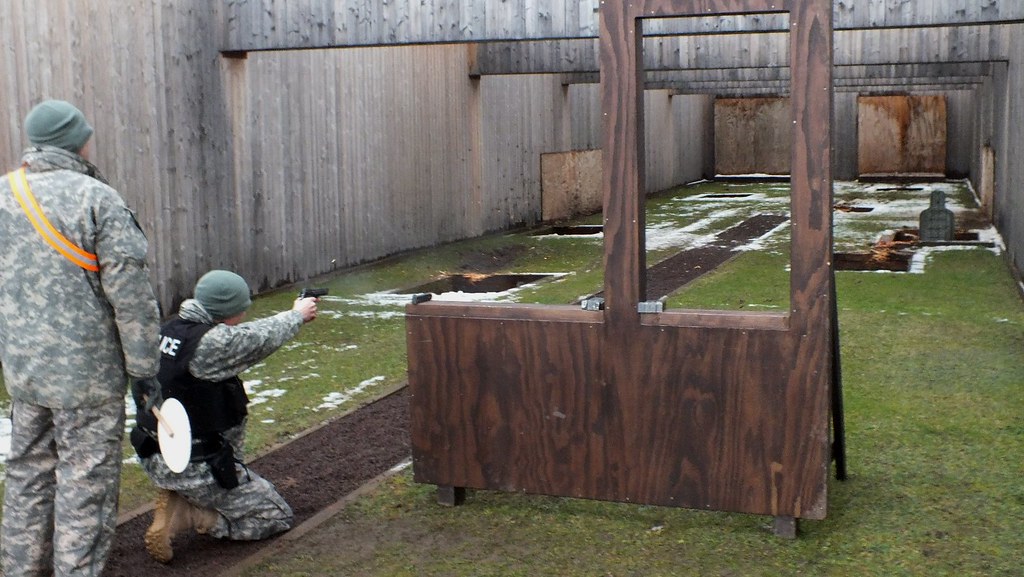
Reholstering deserves as much practice as drawing. Safariland’s guidance is simple: there’s no rush. Keep your finger out of the trigger guard, look the gun into the holster, keep clothing clear of the holster mouth until the gun is fully seated, then reset your retention.
Which level do you need?
Your employer decides, and requirements vary. No Texas rule sets a holster retention level for security officers. In our experience, many armed posts require Level 3 retention, and some accept Level 2. Ask before you buy, then get a holster made for your exact handgun model (and light, if you carry one) and train with it until it’s second nature. What makes a duty holster last a whole career is covered in a separate guide. If you haven’t picked your handgun yet, start with choosing a duty handgun.
Train with your gear
Bring your duty holster to your Level III in-person training day. Drawing from retention under instruction is the fastest way to find out what you need to work on. Already licensed? Your recertification range session is a good time to check your draw, too.

FAQ
What holster retention level do I need for armed security work?
Your employer sets the requirement. No Texas rule specifies a holster level. In our experience, many armed posts require Level 3 retention and some accept Level 2, so check before you buy. Many also ban trigger-finger-release holsters like the SERPA.
What does a holster retention level measure?
Usually the number of retention devices holding the gun. Level 1 is friction or a Kydex click-in, and each level above adds one active device, like a thumb break or locking hood. Safariland developed the original rating system, but there’s no true established standard and manufacturers rate their own holsters, so check how your specific holster works.
Is a Level 3 holster too slow?
Only if you don’t practice with it. In our experience, the extra time comes from unfamiliarity, and a few days of safe dry-fire practice usually makes a Level 3 draw smooth.
Is a Level 3 holster the same as a Level III security license?
No. A Level III license is the Texas DPS commissioned (armed) security officer license. A Level 3 holster is a retention rating. They’re unrelated.
How should I practice drawing from a retention holster?
Dry fire with an unloaded, verified-clear firearm, all ammunition in another room, and the muzzle toward a safe backstop. Work slowly until the draw and reholster are smooth and safe, then build speed, and finish with live fire under instruction.
Photo credits
- Header: Photo: Tony Webster, CC BY 2.0
- Kydex holster: Photo: Mojave Desert, CC BY 2.0
- Range qualification: Photo: U.S. Army Europe, public domain