Securing Houses of Worship: A Practical Security Checklist for Texas
The short answer: good house of worship security starts with an honest risk assessment, a trained volunteer safety team with written roles, simple access control, an emergency plan you actually rehearse, and a working relationship with local police. In Texas, volunteer safety teams don’t need a security license as long as members aren’t paid, and the federal government offers free assessment tools and security grants to help.
Churches, synagogues, mosques and temples are built to be open and welcoming, and that’s what makes protecting them hard. Good security isn’t about turning your sanctuary into a fortress. It’s about quietly removing easy opportunities for harm while keeping the doors open.
Start with an honest security assessment
Before you buy a single camera or write a single policy, understand your actual risks. A rural church, a downtown synagogue and a suburban mosque face different threats, foot traffic and neighbors. CISA (the federal Cybersecurity and Infrastructure Security Agency) offers a free Houses of Worship Security Self-Assessment, and you can ask local police or a CISA Protective Security Advisor to walk your site. A professional security risk assessment goes deeper and gives you a prioritized, budget-aware plan.

Build a trained volunteer safety team
Your first and most important layer is people. A volunteer safety team, often trusted members, off-duty officers or veterans, provides a calm, familiar presence that most hired guards can’t.
- Recruit for temperament. The best members are observant, level-headed and genuinely care about hospitality.
- Define roles in writing. Who watches the doors, who roams the grounds and parking, and who coordinates and calls 911.
- Write your policies down, especially use of force, medical response and when to escalate. Volunteers should never guess at their authority.
- Train, then train again. Skills fade without practice, and Texas sets no training minimum for volunteer teams, so your congregation has to set its own.
What Texas law says about church security teams
- Volunteer teams don’t need a security license. Texas Occupations Code §1702.333 exempts security provided on the premises of a place of worship without compensation. That means no pay, stipends or gift cards.
- No “SECURITY” shirts or badges. Volunteers may not wear a uniform or badge that says “security” or makes them look like a peace officer or licensed security officer. Off-duty peace officers may wear their agency uniform with their chief’s consent.
- Paid security is different. Anyone paid to provide armed security must hold a Texas commissioned security officer license, which requires Level II and Level III training and the MMPI.
- Carrying in church: since 2019, license holders may carry at a place of worship unless the church gives notice. A 30.06 notice bars concealed carry and a 30.07 notice bars open carry. Since 2021, a 30.05 notice bars people carrying without a license.
- An LTC is strongly recommended for armed team members. Permitless carry means it isn’t legally required for adults 21 and over, but it documents training, and a 30.05 notice doesn’t apply to license holders.
Churches that also host a school or a polling place can fall under additional location restrictions on those days, so check with counsel. The Texas Attorney General’s guidance on security teams is a good starting point.
Control access without closing the doors
- Use one primary entrance during services, and keep other doors locked from outside but always openable from inside. Never chain or block an exit.
- Think in layers: the parking lot and grounds, the building entrance, then key inner areas.
- Improve exterior lighting and trim landscaping to keep clear sightlines near doors.
- Secure children’s and youth areas with check-in and check-out procedures.
- Place cameras at entrances and parking areas positioned to identify people, not just record after the fact.
Greeters are your early warning system
Most incidents at houses of worship aren’t armed attacks. They’re agitated visitors, mental health crises, domestic disputes that spill in, or conflicts between members. CISA’s federal review of attacks on houses of worship found that about one in five was tied to a domestic or personal crisis. Train greeters and ushers to notice and engage: CISA’s free “Power of Hello” approach teaches them to Observe, Hello (start a friendly conversation), Navigate the risk, and Obtain help. A warm, early hello defuses more trouble than any camera.
Write an emergency plan your people can actually use
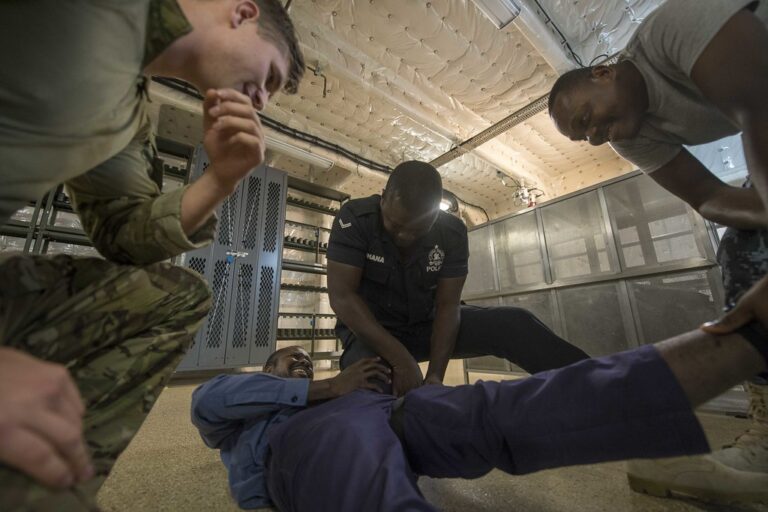
A usable plan covers more than the worst case: medical emergencies, severe weather, fire, a lost child, a disruptive person and an active threat. Keep it short enough to remember, rehearse it at least a couple of times a year (CISA publishes free tabletop exercise packages), and make sure leadership, ushers and childcare workers all know it. Trauma can come from an accident as easily as an attack, so train your team in bleeding control and keep Stop the Bleed kits on hand.
Coordinate with law enforcement, and look into grants
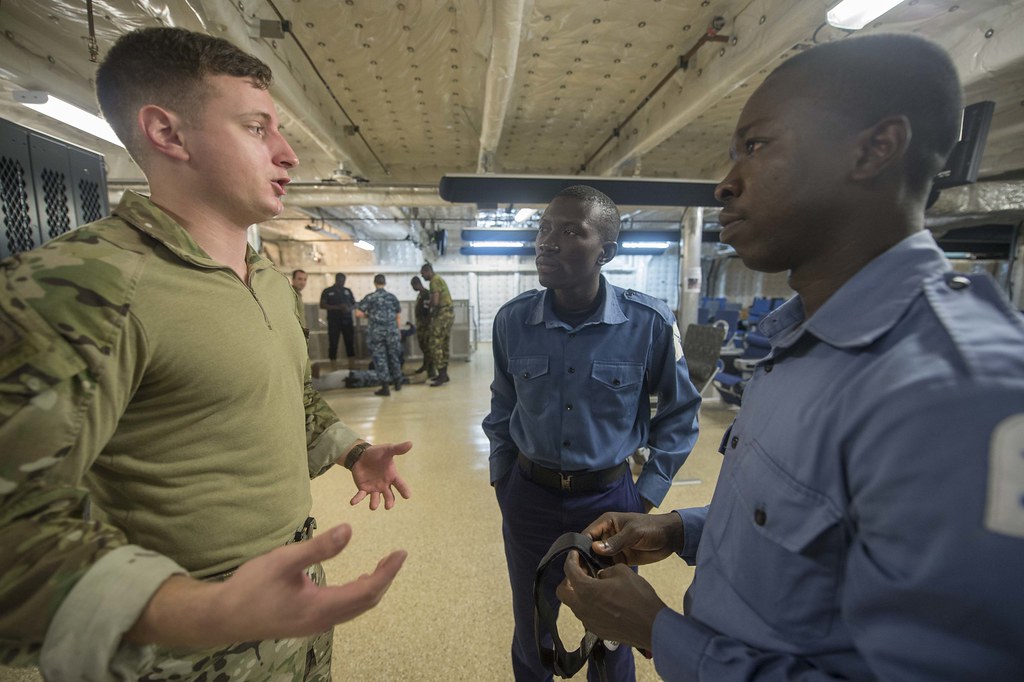
Don’t wait for an emergency to meet your local police or sheriff. Invite them to walk the facility, share your floor plan, and give them your safety team coordinator’s contact information. Report threats and hate incidents. To pay for improvements, the federal Nonprofit Security Grant Program funds “target hardening and other physical security enhancements” for nonprofits at high risk of attack. In Texas it’s administered through the Office of the Governor’s eGrants system.
Your house of worship security checklist
- Complete a risk assessment of your grounds, building and events.
- Name a safety team lead and assign written roles.
- Write use-of-force, medical and escalation policies.
- Keep volunteers unpaid and out of “security”-labeled uniforms. Use licensed officers for any paid security.
- Decide your carry policy and post 30.06, 30.07 or 30.05 notices if you choose to.
- Train the team, including de-escalation, greeter awareness and bleeding control.
- Use one primary entrance and confirm every exit opens from inside.
- Improve lighting, sightlines and camera coverage at key points.
- Secure children’s areas with check-in and check-out procedures.
- Write and rehearse an all-hazards emergency plan.
- Introduce your team to local law enforcement.
- Cover cybersecurity basics: accounts, livestream and donation systems.
- Look into Nonprofit Security Grant funding.
- Review everything at least once a year.
How Nighthawk Alliance can help
Nighthawk Alliance is a veteran-owned, Texas DPS-licensed training and consulting firm. Our experience includes securing houses of worship, multi-purpose arenas, warehouses and Fortune 500 companies. We don’t hire out guards. We help your people protect your people, through risk assessments, emergency planning and on-site training for safety teams, anywhere in the country.

FAQ
Does a church security team need a license in Texas?
Not if the members are unpaid volunteers providing security on the church’s premises. Texas Occupations Code §1702.333 exempts them, as long as they don’t wear uniforms or badges labeled “security.” Paid security officers need a Texas DPS license.
Can people carry a handgun in church in Texas?
Yes, unless the church gives notice. License holders may carry unless the church posts or gives 30.06 (concealed) or 30.07 (open) notice. People carrying without a license can be barred with 30.05 notice.
Do armed volunteers need a License to Carry?
Not legally, for eligible adults 21 and over, since Texas allows permitless carry. We strongly recommend it anyway: it documents training, and a 30.05 notice doesn’t apply to license holders.
Where do we start if we’ve never done this before?
With a risk assessment. CISA’s free self-assessment is a good first step. From there, building a safety team and an emergency plan becomes far more focused and cost-effective.
Can you train our volunteer safety team?
Yes. We train volunteer safety teams on site, nationwide, covering observation, de-escalation, emergency response and coordination with law enforcement. Contact us to plan a session.
Photo credits
- Photo: CNE CNA C6F, public domain