Choosing a Duty Handgun for Armed Security Work in Texas
The short answer: before you buy a duty handgun for armed security work, ask your employer for their approved firearms list. If you don’t have an employer yet, a Glock 17 or 19 or a Smith & Wesson M&P in 9mm is, in our experience, accepted almost everywhere. Plan on a standard magazine of 10 rounds or more, one in the gun and two spares, and a retention duty holster. Budget pistols like Hi-Point and Kel-Tec are rarely approved, and buying the wrong gun usually means buying a second one.
Every year we see new Level III students show up with a handgun they bought before talking to anyone, only to learn their security company won’t let them carry it. New to security work? Start with how to become a security officer in Texas. This guide covers what the state requires (less than most people think), what most Texas security companies look for in a security guard handgun, and which models are safe bets.
What the state requires, and what it doesn’t
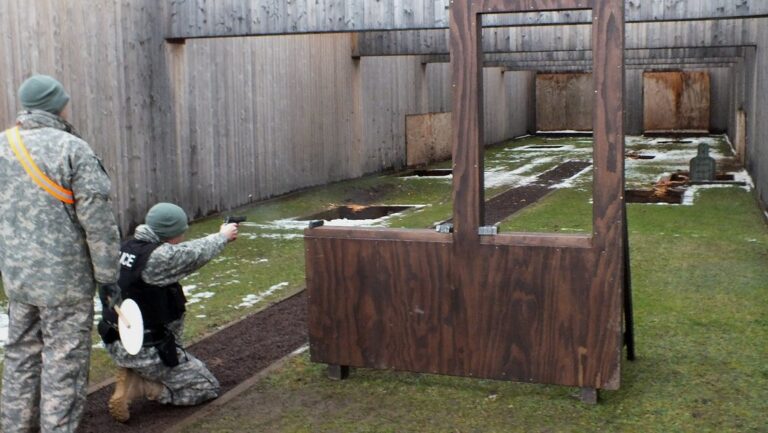
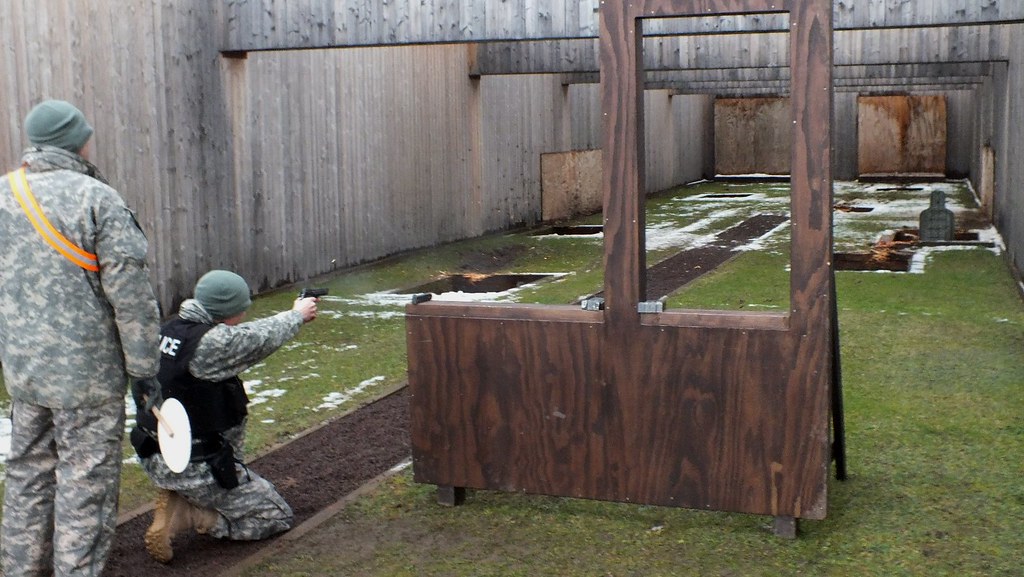
Texas DPS qualifies commissioned security officers by firearm category, not by make, model or caliber. The handgun category (“SA”) authorizes carrying either semi-automatic or non-semi-automatic handguns. In practice, if you qualify with a semi-automatic 9mm and later carry a semi-automatic .45, the state doesn’t require you to notify DPS or requalify.
- When you qualify: before your commission is issued, and again within 90 days before you renew. A commission lasts up to two years, so there’s no annual state requalification.
- What the state doesn’t regulate: brand, caliber, optics, holster retention level and magazine capacity. Those are set by your employer.
Your employer decides what you carry
The security company you work for decides which firearms, holsters and ammunition you may carry on their posts. Many keep an approved list, and some clients add requirements of their own. Rules vary from company to company, so treat everything below as what we’ve seen usually accepted, and get the list before you spend money.
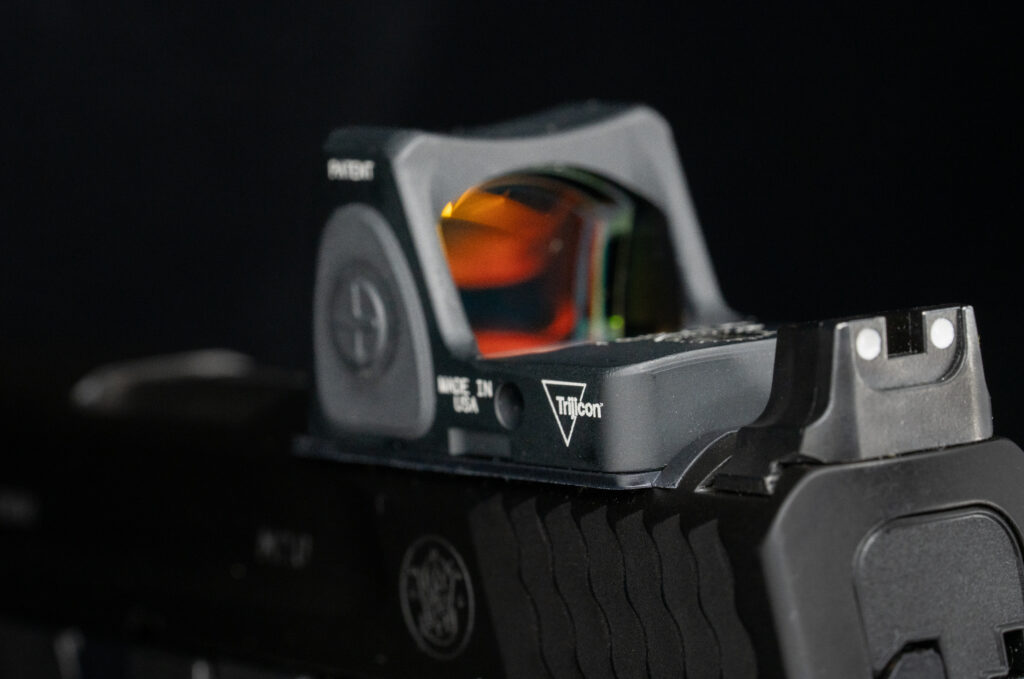
Some companies also run their own qualification on top of the state’s. Those companies usually require you to qualify with a new gun before you carry it, and that often includes adding an optic such as a red dot (a Trijicon RMR, for example). Police agencies commonly require a separate red-dot transition course for the same reason; Houston PD, for one, requires an 8-hour course. Whether your company does this is hit or miss, so ask before you switch guns or add an optic.
What makes a good duty handgun
- Reputation. A long track record with police and security agencies, proven reliability, and parts and armorer support that are easy to find.
- A common duty caliber. In our experience 9mm is the most widely accepted, .40 S&W is also common, and some companies allow .45 ACP.
- Standard magazine capacity of 10 rounds or more. That’s the factory magazine that ships with the gun, not an aftermarket extension.
- A full-size or compact frame. Small concealed-carry pistols often fall short on capacity and don’t fit duty holsters.
- Duty holsters available for it. If the major duty holster makers don’t build a retention holster for your model, that’s a warning sign.
Duty handguns that are almost always accepted
| Model | Standard capacity | Why it’s a safe bet |
|---|---|---|
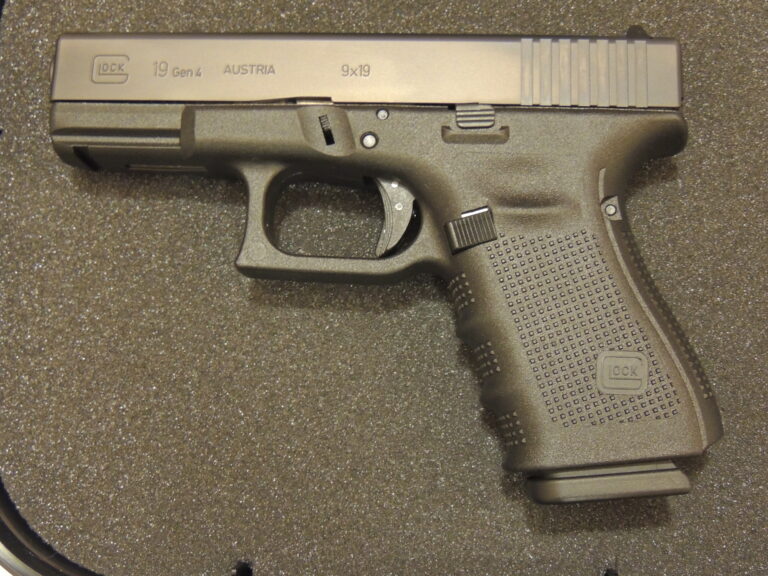
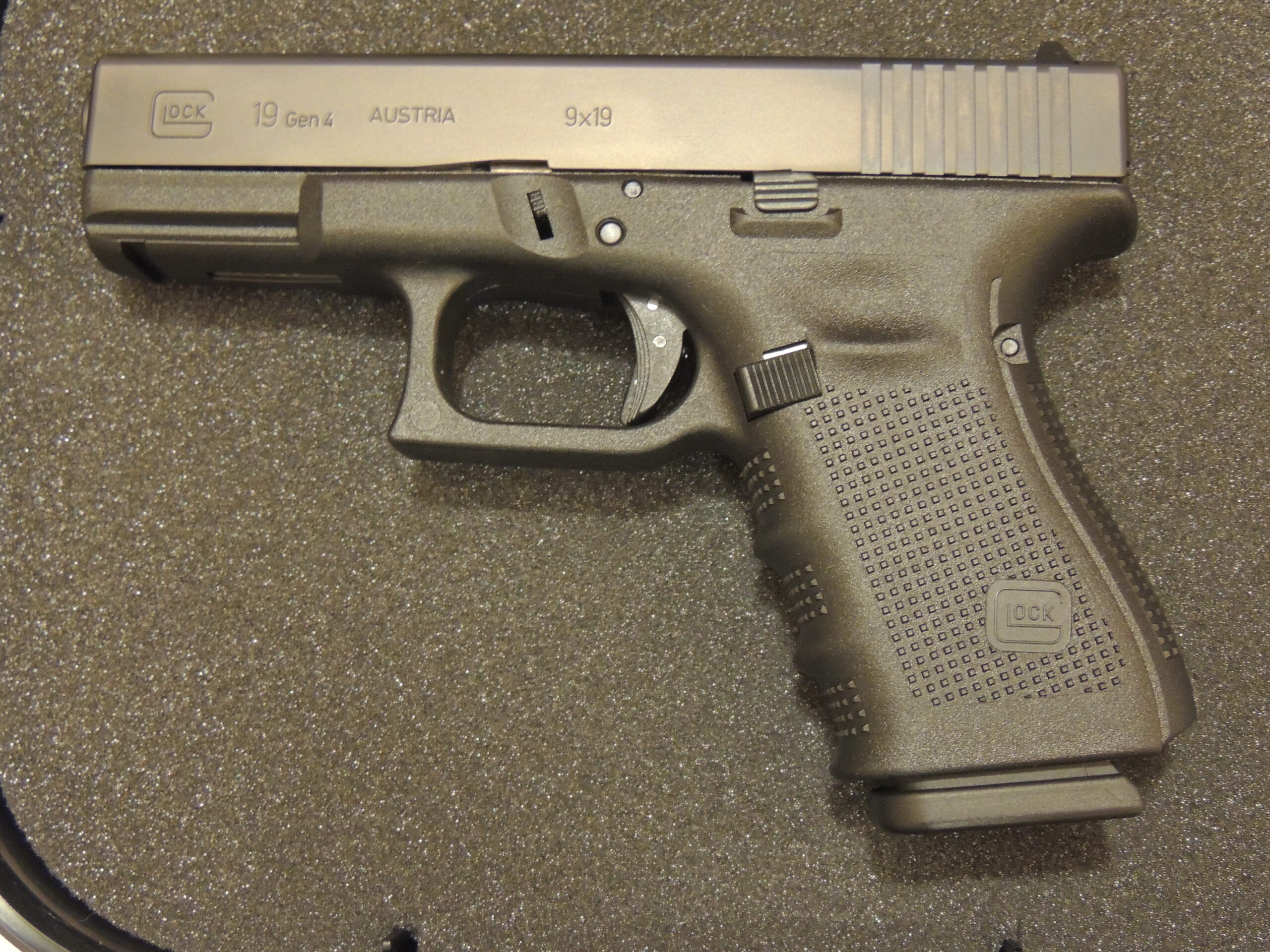
| Glock 17 (full size) / Glock 19 (compact), 9mm | 17 / 15 | About as close to universally approved as it gets. Glock reports it is the preferred pistol of about 65% of US law enforcement agencies. Every duty holster maker supports them. |
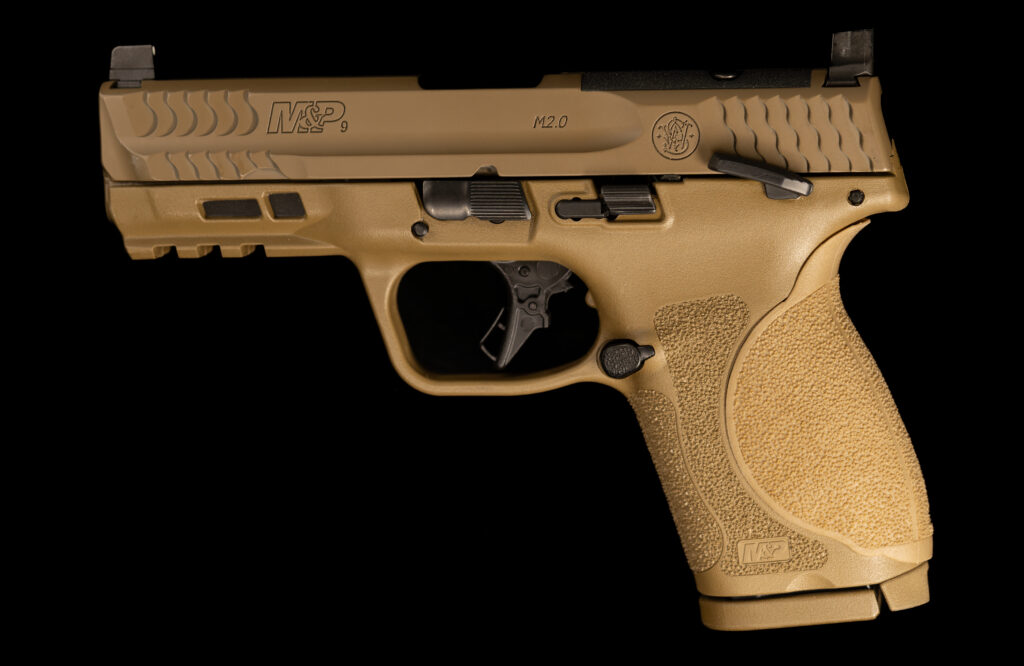
| Smith & Wesson M&P9 M2.0 (full size / compact) | 17 / 15 | A long-standing police duty pistol with wide holster support. The M&P40 (15 rounds) is common too. |
| Smith & Wesson SD9 2.0 / SD40 2.0 | 16 / 14 | A lower-cost option from a major duty manufacturer that, in our experience, most companies accept. |
Other established duty pistols from major manufacturers are often on approved lists too. If you’re looking at something not listed here, ask your employer first.
Handguns that often get turned down
- Canik. A popular, good-value pistol for personal use. In our experience, though, many security companies haven’t added it to their approved lists. Students who show up with one are often told to buy another gun.
- Hi-Point and Kel-Tec. Rarely allowed on duty, and not a firearm we’d recommend as a first investment for a security career. Several models also come up short on capacity: the Hi-Point C9 holds 8 rounds and the Kel-Tec PF9 holds 7.
- Small single-stack carry pistols. Great for off-duty concealed carry, but most hold fewer than 10 rounds and don’t fit a duty holster.
None of this is a knock on anyone’s personal gun. It’s about what a company will sign off on for armed duty, where reputation, support and consistency matter.
Magazines: three is the usual minimum
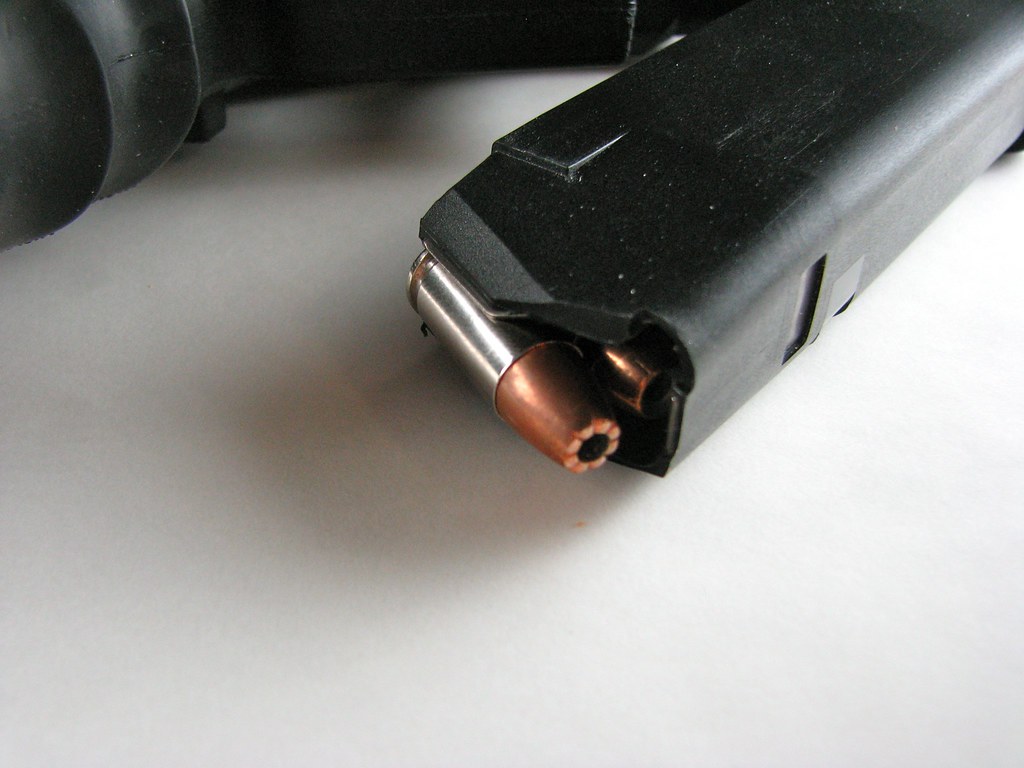
- In our experience, most companies require one magazine in the gun and at least two spares on your belt.
- Use standard-capacity factory (or OEM) magazines, 10 rounds or more.
- No extended magazines. 30-round pistol magazines and similar extensions are generally not allowed on duty. Texas law doesn’t limit magazine capacity; this is company policy.
Holster: a retention duty holster
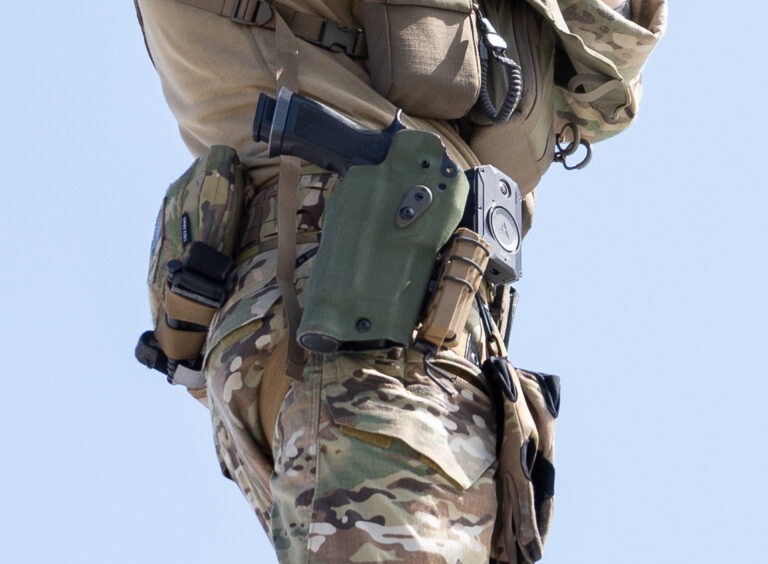
Armed posts call for a duty holster with active retention, made for your exact handgun model (and weapon light, if you run one). In our experience many require Level 3 retention (a holster rating, not your Level III license), and many ban trigger-finger-release holsters like the SERPA. A concealment holster or a universal nylon holster won’t pass. See holster retention levels explained for how each level works and how to train with it.
Before you buy: a quick checklist
- Get your employer’s (or likely employer’s) approved firearms list.
- Pick a model on it in a common caliber, ideally 9mm.
- Confirm it ships with magazines of 10 rounds or more, and buy at least two spares.
- Make sure a retention duty holster exists for it, at the level your employer requires, and buy that holster.
- If your company runs its own qualification, qualify with the gun (and any optic) before you carry it.
Not ready to buy yet?
You don’t need to own a handgun to take Level III training with us. You can reserve a firearm and holster rental for your in-person training day when you book. That way you learn on a proven duty pistol, then buy your own once you know what your employer allows.
FAQ
Will my security company accept a Glock 19?
Almost certainly. In our experience the Glock 17 and 19 are accepted by nearly every security company. Still, confirm with your employer’s approved list.
Do I have to tell DPS if I switch handguns?
Not if you stay in the same category. Texas qualifies security officers by category, and the handgun qualification covers semi-automatic and non-semi-automatic handguns. Your employer may still require you to requalify with the new gun, especially if they run their own qualification.
Can I carry my Canik on duty?
Maybe, but don’t count on it. In our experience many companies haven’t approved Canik pistols, and students who assumed they could often had to buy a second gun. Ask before you show up with one.
How many magazines do I need?
Usually three: one in the gun and two spares, all standard-capacity magazines of 10 rounds or more. Extended magazines, like 30-round pistol mags, generally aren’t allowed by employers.
Do I need my own gun for Level III?
No. At Nighthawk Alliance you can rent a firearm and holster for your in-person training day, then buy your own once you know what your employer allows.
Photo credits
- Header: Photo: Martin1998cz, CC BY-SA 3.0
- Pistol qualification: Photo: U.S. Army Europe, public domain
- Red dot optic: Photo: Tony Webster, CC BY-SA 2.0
- M&P9 M2.0: Photo: Tony Webster, CC BY 2.0
- Magazine: Photo: mrbill, CC BY 2.0